Chip War
Untold stories
Cover Photo generated by Nano Banana Pro
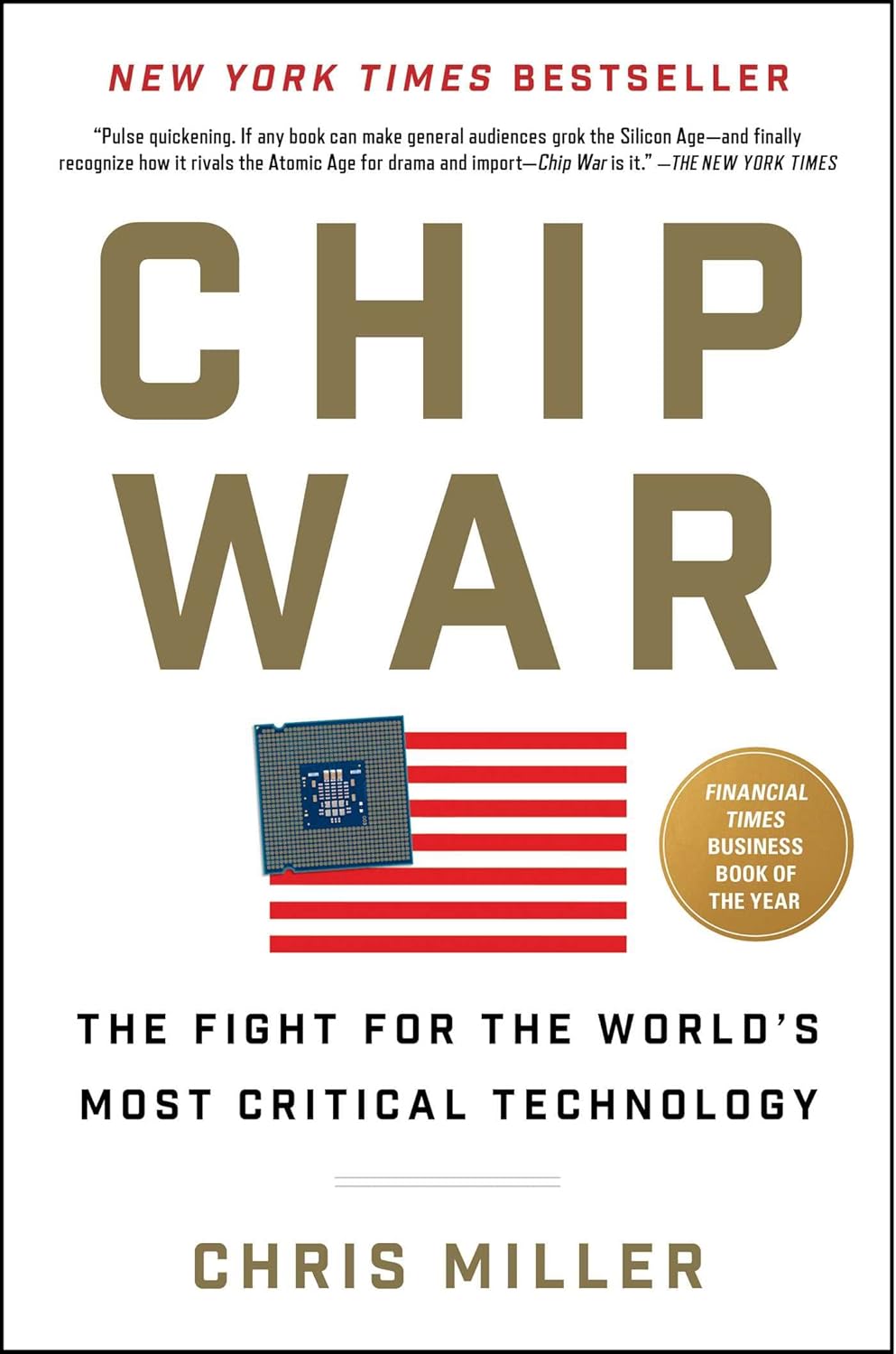 |
Title: Chip War Author: Chris Miller Publication date: Oct 4, 2022 Rating: 4/5 stars |
|---|
Chip War is a biography of the semiconductor industry, tracing its evolution from inception to the post-COVID-19 era. The author meticulously gathered multi-dimensional perspectives from various historical witnesses. The core content highlights the US-China geopolitical chessboard, corporate dramas, and lithography technology.
The heavy focus on “Who will win at the finish line (China or the US)?” makes the author overlook crucial players at the starting line. This is why I withheld one star. The book fails to acknowledge the vital roles of companies like Ajinomoto, TOTO or Kyocera.
Ajinomoto makes MSG and food seasonings. TOTO makes luxury toilets. What do these companies have to do with chip manufacturing?
- Ajinomoto produces Ajinomoto Build-up Film (ABF), an ultra-thin insulating film made from epoxy resin (a byproduct of MSG production). ABF holds a ~95-99% global market share in high-performance chip packaging.
- TOTO and Kyocera produce fine ceramics, an ultra-fine material with high purity. Ceramic substrates are essential for insulation, heat dissipation, and microcircuit protection.
In 2021, during the peak of the COVID-19 pandemic, the world shifted to remote work, online learning, and home entertainment. Demand pivoted from mobile devices to high-performance computing. The resulting chip shortage exposed systemic chokepoints that more factories alone couldn’t fix. It embodied a stark reality. Even with ample wafers and a $200M ASML machine, you can’t produce a single server or GPU without specific films from a Japanese MSG company.
If Chip War offers the geopolitical map, then books like Ed Conway’s Material World and Vaclav Smil’s How the World Really Works clarify the terrain. They reveal material flows that underpin the fragile global supply chain. These books are essential to fill the gaps a purely political lens misses.