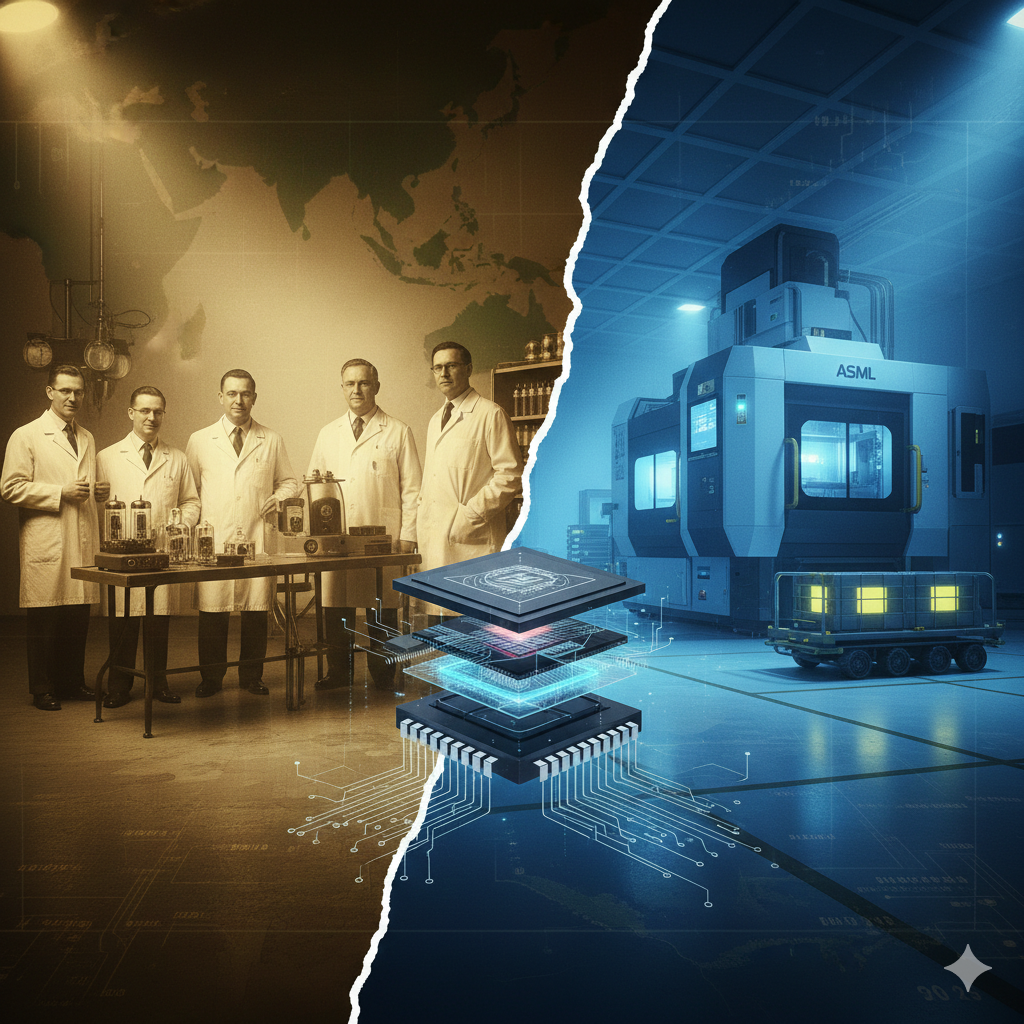
Tales of the robot joint
Where intelligence meets the real world
Cover Photo generated by Nano Banana Pro
While the West ties itself in knots over superintelligence and AI stealing jobs, East Asia holds a different conviction: Intelligence needs a “body” to manifest in the real world. A world governed by social purpose, gravity, friction, and inertia.
China builds martial arts robots. Japan builds surgical ones. Two nations, two cultures, two completely different bets. China wants to lead the next industrial revolution with robots built like a universal muscular system. Japan wants to hold its social fabric together amidst an aging population with robots built like a delicate nervous system.
Both confront the same paradox. AI can solve Math Olympiad problems or draft philosophy in seconds, yet stumbles at tasks any three-year-old handles without thinking: picking up a cup, crossing a wet floor. The answer to that paradox doesn’t live in a chat interface. It lives in the robot’s joints.
The Chinese Joint: Brute-Forcing the Chaos
Beijing’s “Robot+” strategy is built on a contrarian bet: Stop treating imperfection as the enemy. Joints will deviate; so measure the deviation, correct faster than it accumulates, and let the real world be the training ground. Don’t wait for perfect hardware. Flood the zone.
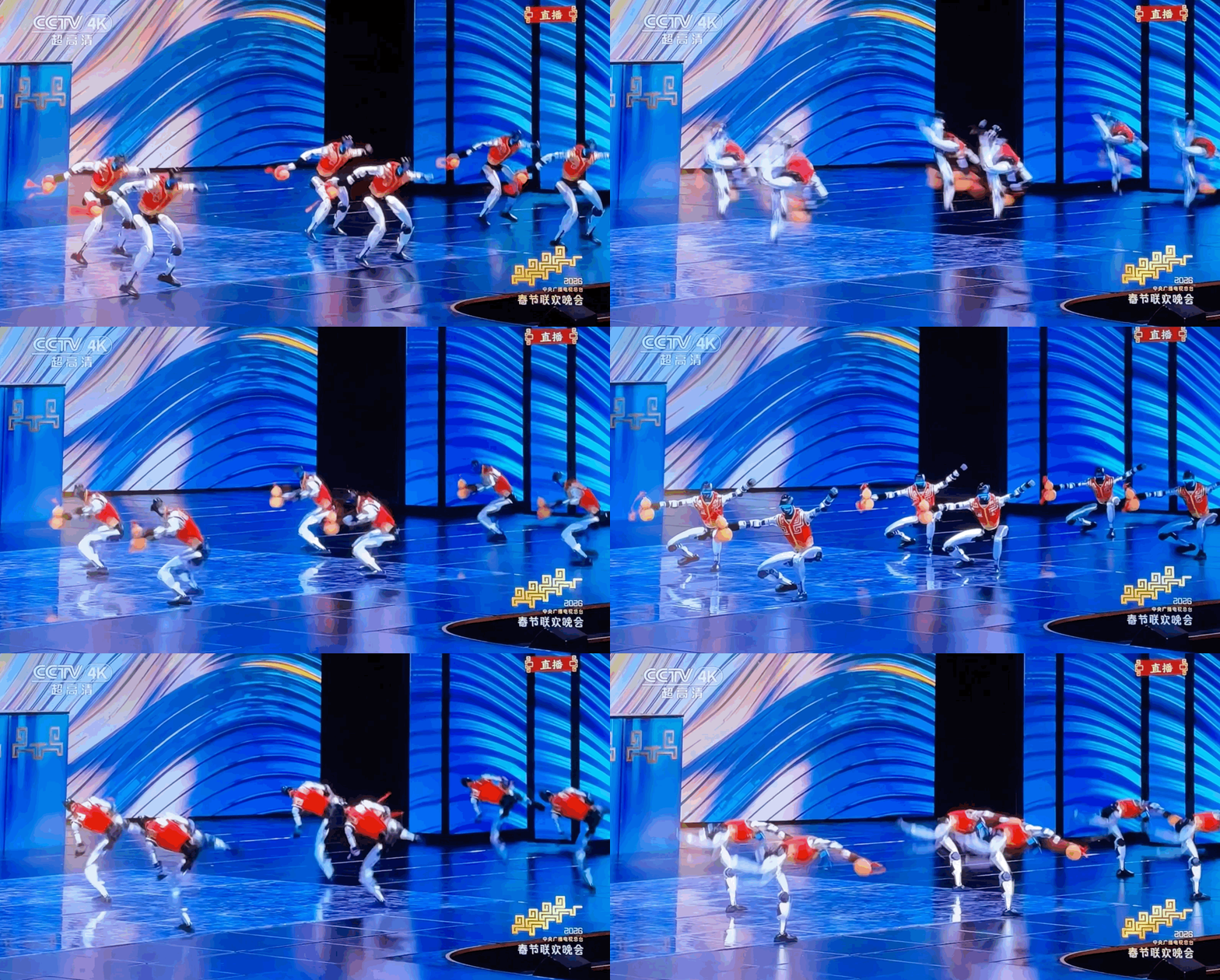
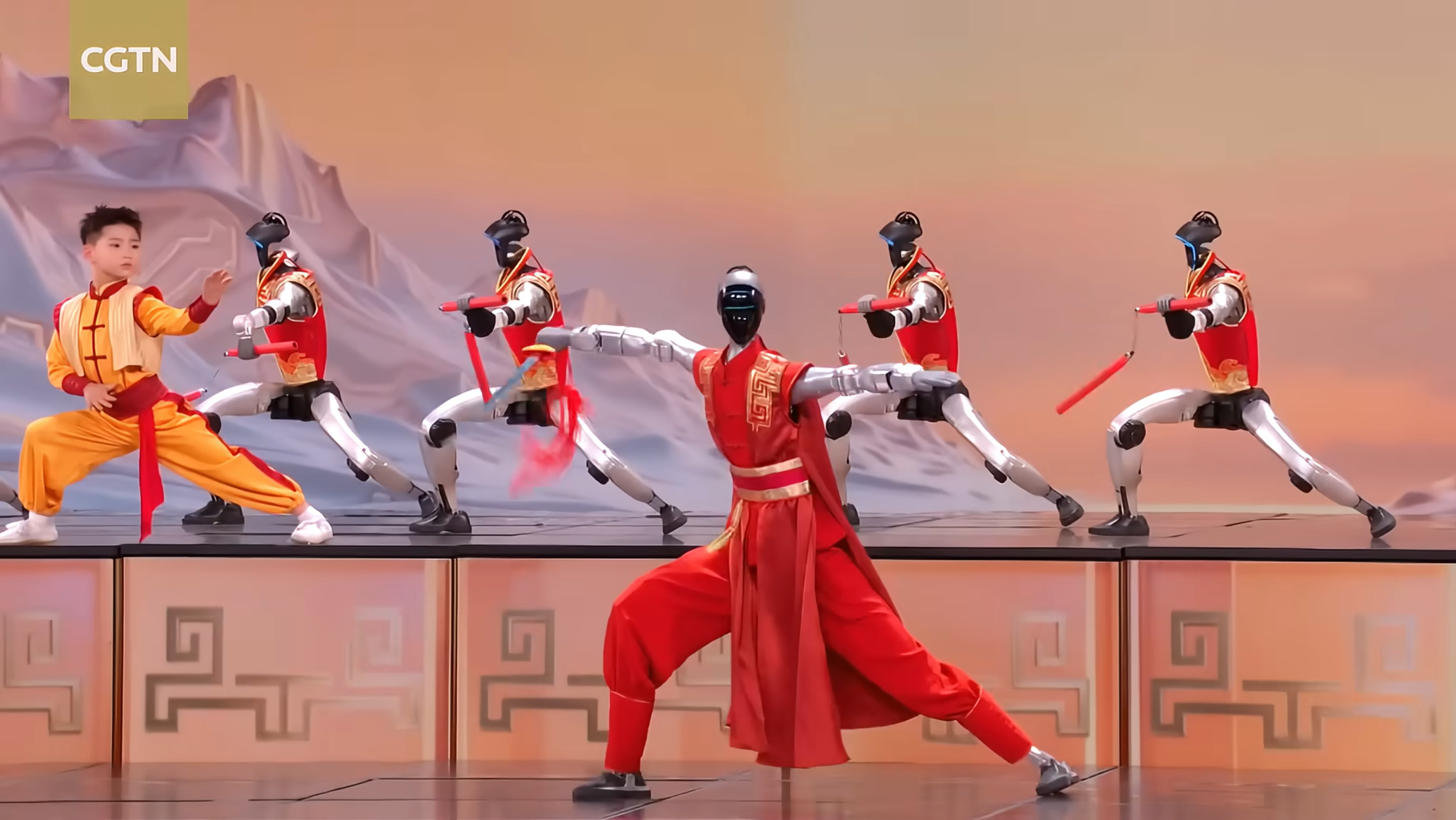
At the 2026 Spring Festival Gala, Unitree turned the stage into a technical demonstration. Their WuBOT (武 BOT) act put 24 G1 humanoids through Shaolin martial arts, drunken boxing, and nunchaku, before the H2 closed the show with a wushu swordplay.
Over 13.5 billion viewers marveled at the flashy choreography. But what Unitree really wanted to sell here was the capability to recover balance at high speed, or the actual dividing line between a performance and a robot that can work.
- Stability in every flip. In the drunken boxing routine, to land an aerial flip without dropping its prop wine jug, the G1 draws on 31 degrees of freedom. With three joints in the waist and seven in each arm, it is remarkably human-like in its flexibility. This joint network course-corrects its balance 500 times a second, roughly 50 times faster than a human blink.
- Power in every swing. When the H2 swings a sword, its 70 kg frame generates enormous inertia through the waist and hips. Its 360 N·m peak hip torque, which is comparable to the towing force of a mid-size sedan, anchors the centre of gravity so the wrists and elbows can guide the blade precisely.
 |
 |
|---|---|
| Unitree G1 robots are doing the drunken master mid-air flip. | Unitree H2 robot (large, at the center) is swinging a sword. |
The pricing tells the story. Unitree’s robot prices dropped 93% in three years. This isn’t just a race for market share, but a strategy to commoditize the hardware so the collected data becomes a real asset. The micro-tremors and weight shifts of a body folding laundry can’t be replicated in a lab; you have to go out and record them. Wider deployment means richer data, and richer data means software smart enough to compensate for whatever the hardware gets wrong.
The Japanese Joint: Nipping Chaos at the Source
Japanese robotics inverts the Chinese logic entirely. When hardware maintains absolute precision over tens of thousands of operating hours, software doesn’t need to spend its budget correcting physical errors. Hardware liberates software.
Robots can afford a slight wobble at scale. Walking or hauling simply demands “good enough” stability. That wiggle room vanishes the moment a robot wields a scalpel. At the scale of a needle hole, even the slightest vibration is catastrophic. Precision reducers become essential: the nerve centres of the joint, enabling movements refined to a hundredth of a human hair.
Japan holds roughly 70% of the global market for precision reducers—a dominance rooted in the mastery of core mechanical principles. Every gear is a controlled balance: flexible enough to deform elastically under load, yet rigid enough to never crack. This metallurgical craft cannot be replicated by data or purchased with capital. It is a knowledge moat built over generations. Japan’s culture of meticulous craftsmanship elevates these gears from mere mechanical parts into works of precision art.
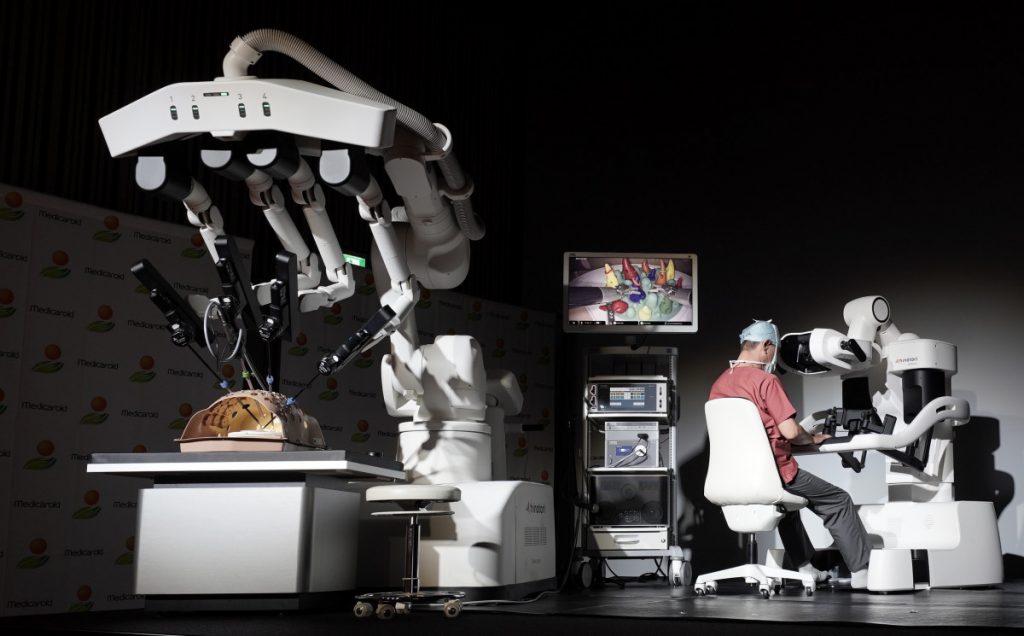
In June 2025, a surgeon in France operated on a patient model in Japan via the Hinotori surgical robot. Thanks to a dedicated optical network and Hinotori’s hyper-precise joints, 23,000 kilometres effectively ceased to exist.
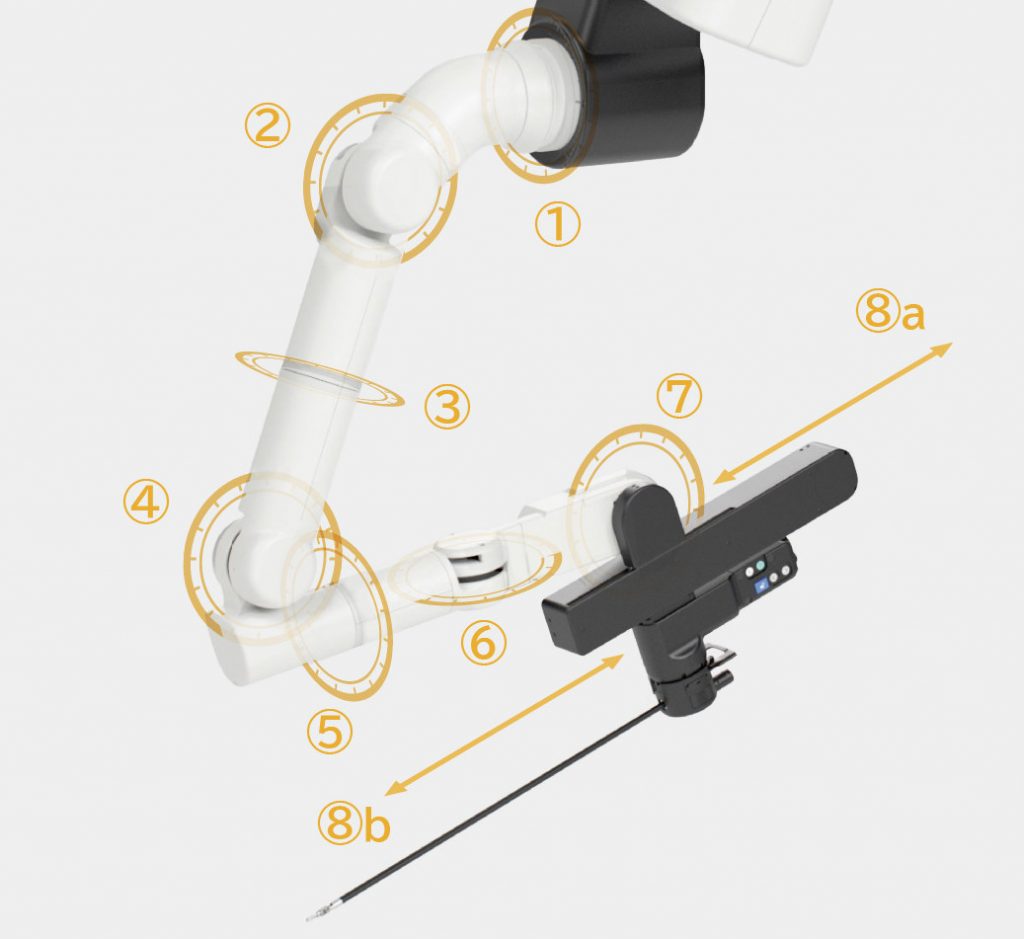
- Beyond human dexterity. Where most surgical robots use a seven-axis arm, Hinotori adds an eighth. That extra degree of freedom lets the arms maneuver through the narrowest surgical cavities and reach angles that far exceed the rotational limits of a human wrist.
- Room to work. The eighth axis allows Hinotori to hold its position entirely in software, eliminating the need for bulky clamps at the incision site. The operating field stays clear, giving the surgical team space to work around the robot, not despite it.
- High-fidelity transmission. A surgeon’s hand naturally trembles around 5 mm. Hinotori filters that down to under 0.5 mm at the instrument tip. The hardware is so precise that the software can ignore the body’s noise and focus entirely on the surgeon’s intent.
 |
 |
|---|---|
| An overview of the Hinotori surgical robot system. Source: Japan Forward | The 8 joints of a Hinotori arm. Source: Japan Forward |
Just as Doraemon’s gadgets empower Nobita rather than replace him, Hinotori was not created to displace the surgeon. It is a trusted partner: anchoring stability, sharpening dexterity, and extending the human hand into frontiers once unreachable.
The joint is where intelligence meets the world. Get it wrong and nothing behind it matters. The robot stumbles, slips, or drifts into the abdominal wall. Get it right and the gap between human intent and machine action collapses to nearly nothing.
China and Japan aren’t building different robots. They’re making different bets about what “getting it right” means. One earns your trust by never letting an error stick. The other by never making one.
The future of robotics isn’t about how closely machines resemble humans; it’s about how much we can trust them with our most critical tasks.