Remembrance Of Earth's Past
No safe harbor
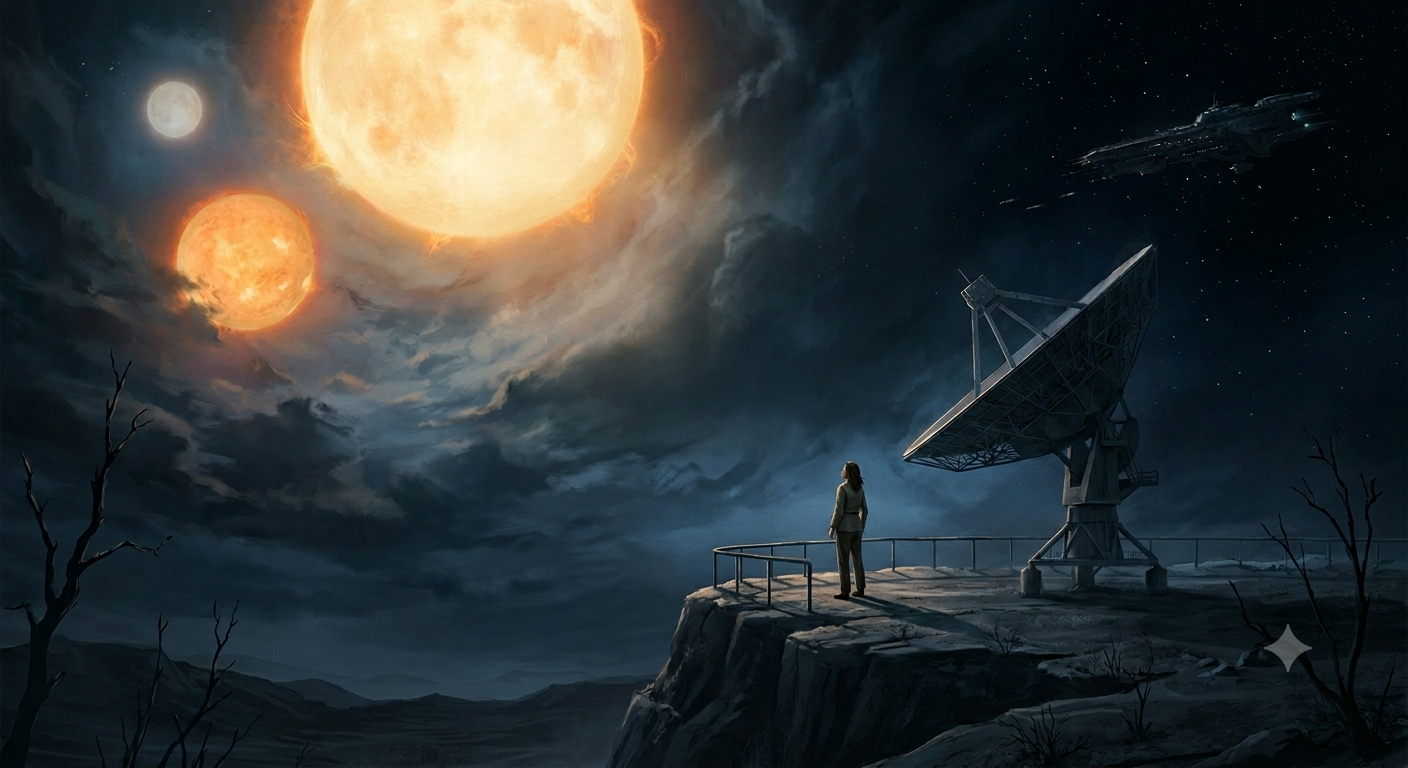
Cover Photo generated by Nano Banana
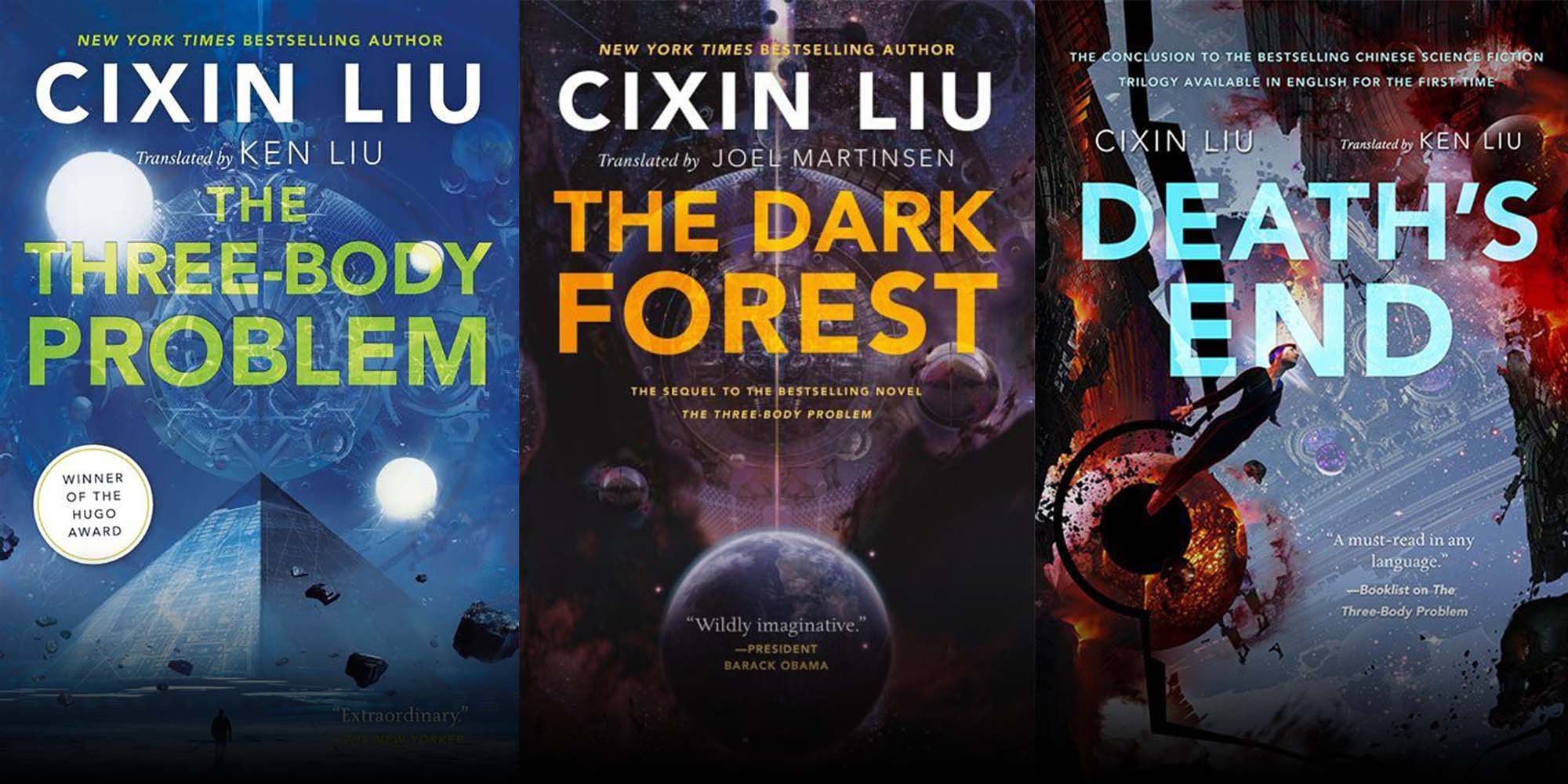 |
Title: Three Body (Remembrance of Earth’s Past trilogy) Original Chinese title: 三体 (地球往事三部曲) Author: Cixin Liu (刘慈欣) Publication date: 2014-2016 Rating: 4/5 stars |
|---|
A friend said the trilogy would change how I think about agriculture. It begins with two suns circling each other the way the moon circles Earth: predictable, eternal. Add a third sun, and the dance becomes chaos; no formula predicts it. From that chaos, Liu Cixin built a cosmos that runs on cold logic. Civilizations that reveal themselves become targets; silence is the only strategy. Physics bends; power still determines who eats. The Three-Body Problem, the opening novel of the Remembrance of Earth’s Past trilogy, became the first Chinese novel to win the Hugo Award.
In most fiction, ideas serve the characters. In Liu Cixin’s work, characters serve the ideas, at a scale most fiction does not attempt: a proton engineered into a supercomputer, a fleet crossing four light-years as a political act.
The more advanced the civilization, the less room for the private self; the Trisolarans cannot hide their thoughts from each other. Liu Cixin’s characters still carry the instinct toward mercy. If we lose our human nature, we lose much; if we lose our animal nature, we lose all.
Liu Cixin grew up in rural Shanxi, where a boy learns early: the patriarch’s power lies in what he withholds; share the knowledge, and the power evaporates. Jin Yong’s jianghu runs on the same principle: identity is positional, power flows through structure, and what governs is reputation enforced by force. The Dark Forest scales it to the cosmos: conceal your strength, strike first, never be detected.
We hear nothing from the cosmos because everyone else learned to stay silent, not because we are alone.
Translated novels rarely survive the American market; Liu Cixin’s was the exception. Ken Liu has spent his career rebuilding Chinese literature in English. Translation cannot maintain an author’s voice; it can only recreate it. With the author’s blessing, he placed the opening chapter first, where in the Chinese edition it appears seventh. Ye Wenjie’s wound became the emotional center of the novel. His footnotes did the same work: Mozi was real, a Warring States philosopher Western readers would otherwise have taken for invention. Mozi had lived, working on optics and logic around 470 BC, more than two thousand years before the West would call the same questions science.
I picked up Silent Spring out of curiosity, trying to understand how a text on pesticides could catalyze the end of the world. Carson named the poison and the world listened. Ye Wenjie had run out of people willing to name it; where I see a warning, she saw a terminal diagnosis. Carson knew the challenge was never mastery over nature, but mastery over ourselves.
The universe is indifferent; humans are not.